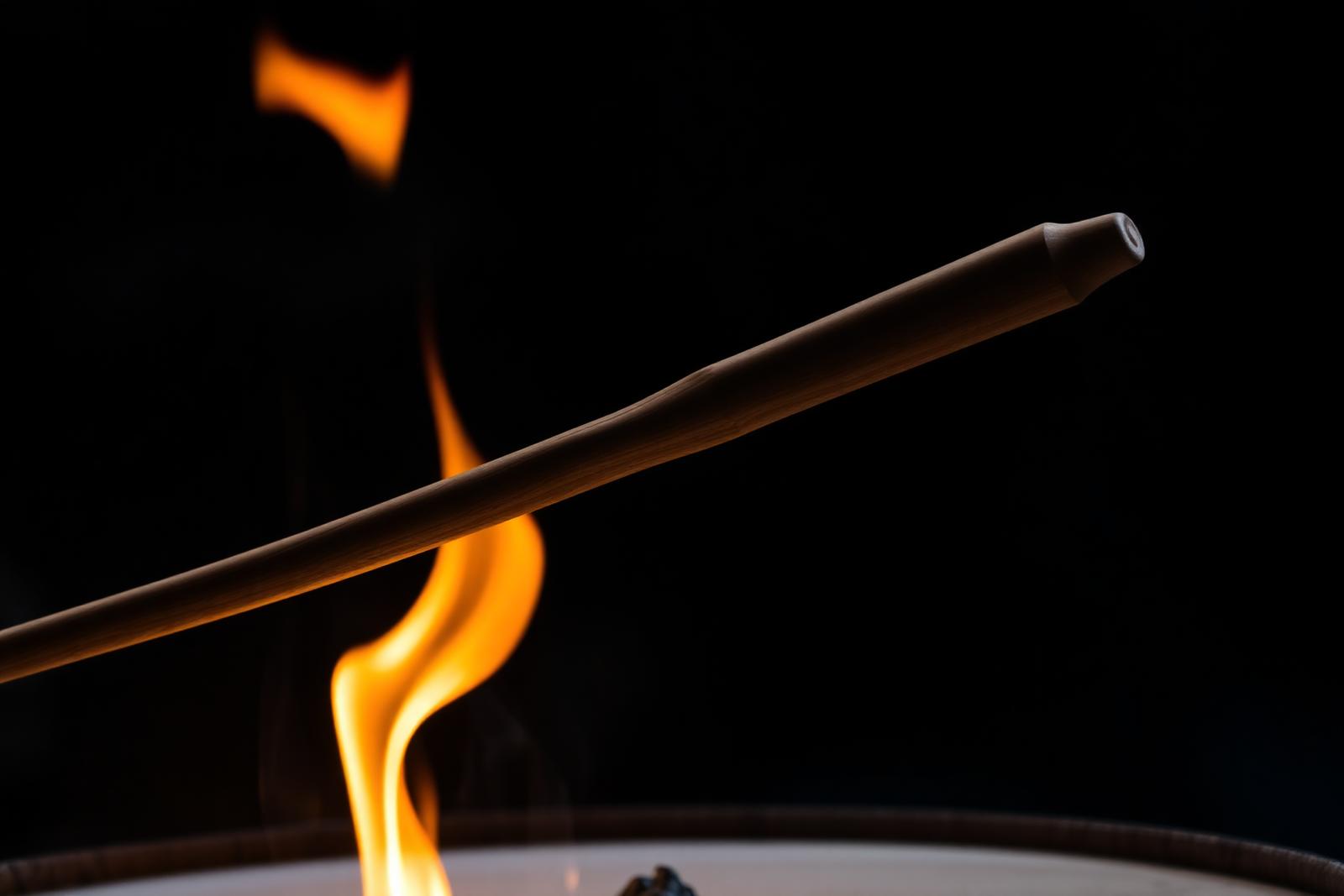
The "fire" in StickFire is literal. Every hickory pair we ship is passed through a controlled propane flame for around four seconds before it's balanced and finished. Here's why.
What heat actually does to wood
At roughly 200°C (400°F), the lignin and hemicellulose in the surface fibers of hickory begin to caramelise. The cell walls tighten, surface moisture drops sharply, and the wood develops a slightly darker patina.
The result, in playable terms, is a stick that feels grippier in the hand, holds its shape longer in humid weather and has a marginally brighter attack on cymbals.
Why "controlled" matters
Too much heat and the stick becomes brittle. Too little and you've done nothing. After two years of trial and error, we settled on a four-second pass through a 360°C flame at a fixed distance — close enough to brown the surface without scorching the grain.
Fire-tempering isn't magic. It's just controlled chemistry. — Intranig
We don't fire-temper our maple sticks. The lighter wood doesn't need it, and the heat changes the tone in ways our jazz players don't want.
Filed in Bench Notes · Written at our workshop on Seward Street, Evanston, IL.
← All articles