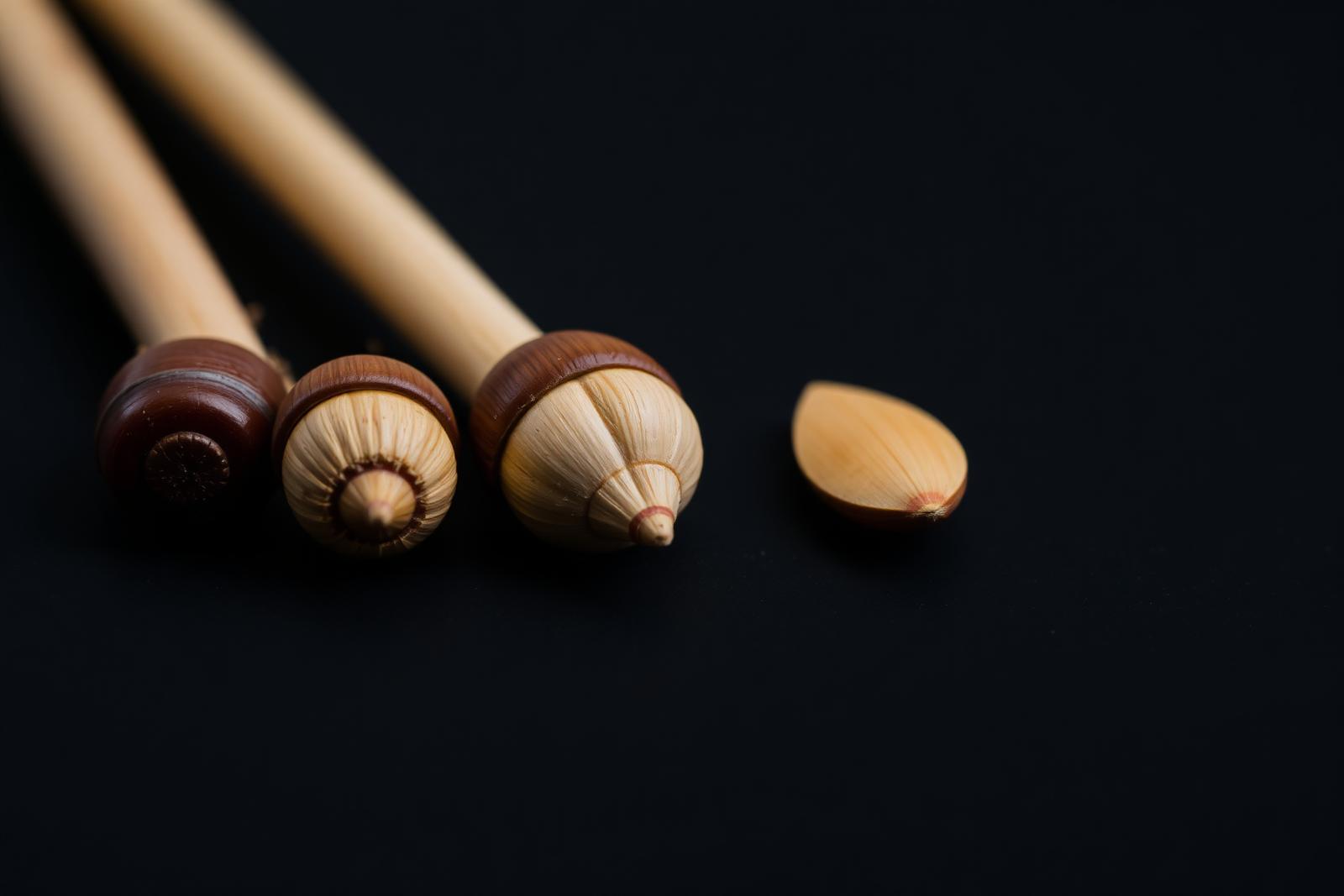
Almost every email we get from a first-time customer starts the same way: "What size should I order?" Here's the short version.
The numbers and letters, decoded
The numbers (7, 5, 2, 3) refer roughly to historical use — 2 was a band stick, 5 was a dance stick, 7 was a parade stick. The letters (A, B, S) refer to taper and shaft thickness, with A being slimmer than B.
5A — the all-rounder
If you're not sure, start here. The 5A is in roughly half the drum bags in America for a reason. Articulate enough for jazz, big enough for indie rock.
5B — the studio favourite
Slightly thicker than a 5A, with a fuller sound on cymbals. Worth the upgrade if you're tracking in a controlled room.
2B — the rock stick
Heavier shoulder, deeper rebound. Built for big rooms, loud bands and long sets.
7A — the quiet stick
Lighter, faster, less commanding. Perfect for jazz, brushes, church gigs and anything where the audience can hear themselves think.
How to actually choose
If you can, pick up a friend's pair before you order. If you can't — and you're a beginner — order a 5A. Nobody who started on a 5A has ever sent us an angry email.
Filed in Bench Notes · Written at our workshop on Seward Street, Evanston, IL.
← All articles